Vision rarely lines up perfectly between the two eyes. Most people live with a small difference for years without thinking about it, and it usually doesn’t mean anything is wrong.
One eye often sees better than the other because each eye can have its own prescription, and your brain blends the two images so smoothly that the gap stays hidden. That blending works in your favour most days. It also means a real change can go unnoticed until your next eye exam.
Common Reasons One Eye Sees Better Than the Other
Each eye focuses light in its own way. One might be nearsighted while the other is farsighted, or one might have more astigmatism, which means the cornea has an uneven curve. When the two prescriptions don’t match, one eye ends up doing more of the work.
Everyday Factors
Plenty of the time, the cause is simpler than that. Here are a few things that can create a difference between your eyes:
- Glasses or contacts with a prescription that no longer matches your eyes.
- Natural eye dominance, where one eye leads the way one hand does.
- Long stretches of screen time that tire out your focusing muscles.
- Dryness on one side, which can blur the surface of the eye between blinks.
Health Conditions Linked to Uneven Vision
Some changes come from eye health rather than your prescription, and they tend to develop slowly. A few worth knowing about:
- Amblyopia, or lazy eye, which develops in childhood when one eye and the brain stop working together properly.
- Cataracts, which cloud the natural lens and dull colour and contrast on one side.
- Glaucoma, which can affect side vision in one eye before the other.
- Retinal changes, which can distort fine detail while the stronger eye fills in the rest.
None of these are painful in the early stages, so comfort isn’t a reliable signal. Finding them sooner gives your optometrist more room to manage them.
Signs One Eye Isn’t Keeping Up
Your eyes usually give you signs before the difference becomes obvious. Watch for a few of these:
- Headaches after reading or a long day at the computer.
- Trouble judging distance, like reaching for a mug and missing.
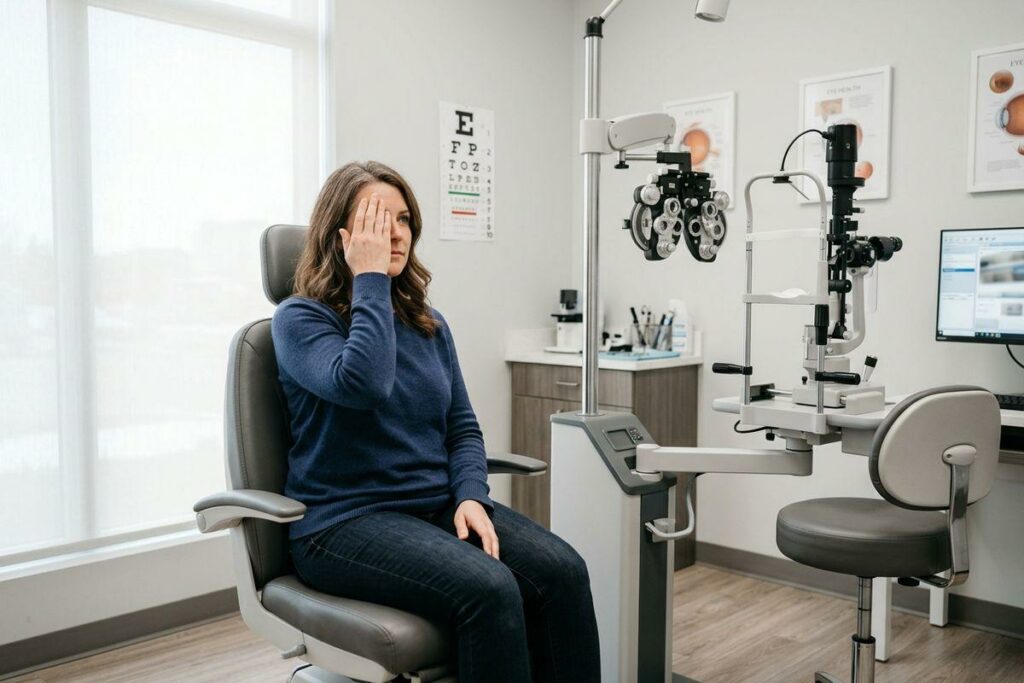
- Squinting or closing one eye to sharpen things up.
- Eye fatigue that builds through the evening.
- Words that seem to swim or double when you’re tired.
Book an exam if any of that sounds familiar. And if the change came on quickly, over a day or two rather than months, call us right away instead of waiting for a routine visit.
What an Eye Exam Checks When One Eye Sees Better
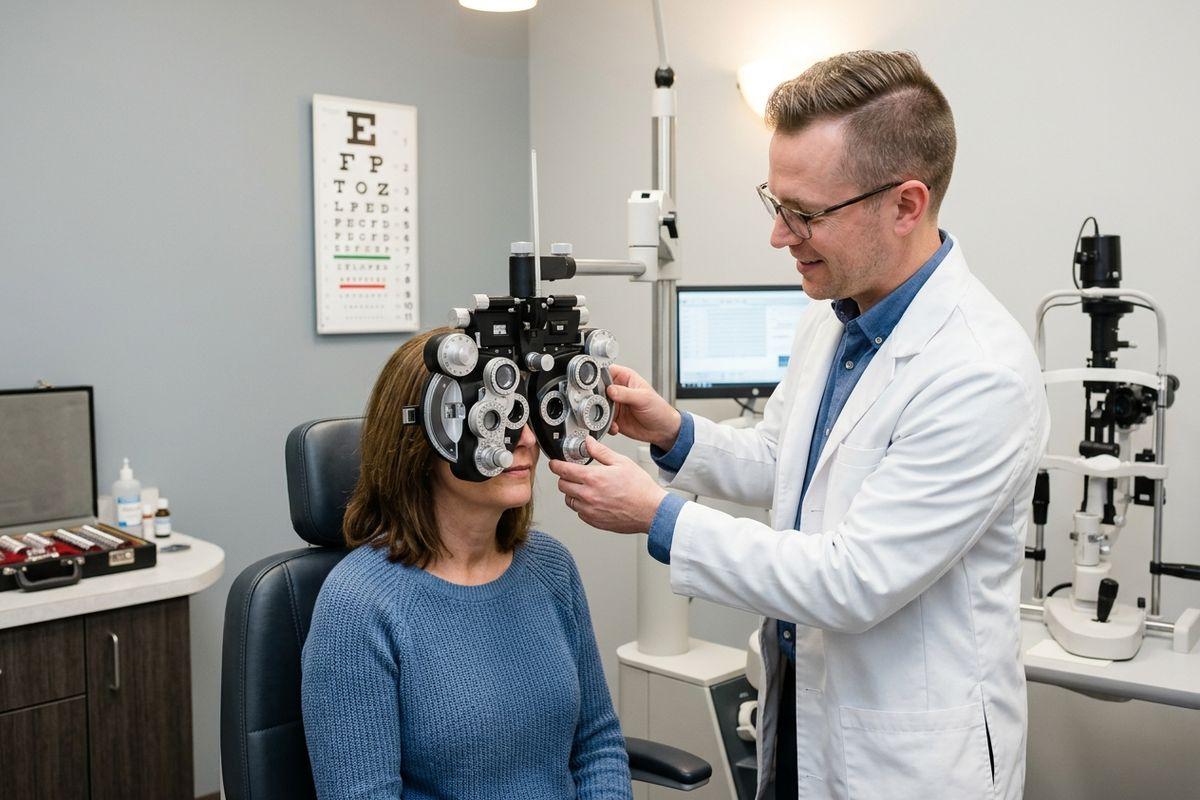
We measure each eye’s clarity first, then look at how the two work as a pair. That second part matters, because eyes can read the chart well individually and still struggle to team up.
We also check alignment, focusing, eye teaming, and depth perception, along with the health of your retina and optic nerve. Those measurements help separate a straightforward prescription gap from something that needs a closer look.
Bring your current glasses or contacts along. Knowing what you’ve been wearing tells us how much of the difference is new, and how long one eye may have been compensating.
Treatment Options for Uneven Vision
Treatment depends on what we find during the exam. Here’s where we might go from there:
- Updated glasses with a separate prescription for each eye.
- A contact lens fitting, which can reduce the size difference between the two images when prescriptions vary a lot.
- Dry eye treatment when the surface of one eye is behind the blur.
- Regular monitoring when eye pressure or the optic nerve needs tracking over time.
- A laser eye surgery consultation if you’d like to look at options beyond lenses.
Give a new prescription a couple of weeks before you judge it. When one eye has been doing less of the work, your brain can take a little while to trust the sharper image it’s suddenly getting.
Sort Out the Difference Between Your Eyes
Different vision between your eyes can come from an outdated prescription, and it can also be worth monitoring for other reasons. An exam helps you find out which.
Our optometrists at Stonebridge Eyecare examine each eye individually, check how the two work together, and explain what we find in plain language. Book your eye exam and give both eyes the attention they deserve.