
Key Takeaways
- Your eyes repair themselves overnight, and about 7-9 hours of sleep supports that process.
- Short nights can leave your eyes dry, red, blurry, and twitchy.
- Ongoing sleep loss may raise the risk of glaucoma and diabetic eye trouble.
- Sleep apnea has links to higher glaucoma risk, and eye exams can spot early signs.
- Small habits like screen breaks and a dark bedroom help protect your vision.
Sleep Is Important to Eye Health
You’ve probably rolled out of bed after a short night with eyes that feel gritty and heavy. At Stonebridge Eyecare, our team hears about tired, scratchy eyes from people of every age. Yes, a lack of sleep can affect your eyes, leaving them dry, red, and blurry in the short term while raising the risk of eye problems over the long term. The good news is that a few simple habits and regular eye exams in Saskatoon can help you protect both your sleep schedule and your vision.
How Sleep Helps Your Eyes Rest and Heal
You lie down, close your eyes, and drift off. While you sleep, your eyes get to work too.
Just like your muscles recover overnight, the tissue around your eyes repairs itself while you rest. Your tear film also refreshes while you sleep, clearing out dust and strain built up during the day. That fresh layer keeps things smooth and comfortable when you wake up.
Aiming for 7-9 hours of sleep gives your eyes enough time to reset.
Short-Term Eye Problems from Poor Sleep
One rough night can have immediate effects. Common short-term symptoms include:
- Dry, itchy, or red eyes
- Blurry vision or trouble focusing on a screen or page
- Eyelid twitches and extra sensitivity to bright light
These symptoms usually fade once you catch up on rest. If they do stick around, that can point to an issue that requires a deeper look.
What Tired Eyes Look Like
Sleep loss can leave dark circles and puffiness under your eyes. Your eyelids might droop, and the whites of your eyes can take on a bloodshot look. A splash of cool water helps for a moment, but real rest does the actual work.
Long-Term Eye Risks Linked to Sleep Loss
A single late night is one thing. Months of short sleep can quietly add up in ways that reach beyond how you look and feel.
Glaucoma and Optic Nerve Concerns
Too little sleep has been linked to higher pressure changes that can affect the optic nerve, which raises glaucoma risk over time. Glaucoma often shows no early symptoms, but glaucoma testing in Saskatoon can help catch changes before you notice them yourself.
Diabetic Eye Health
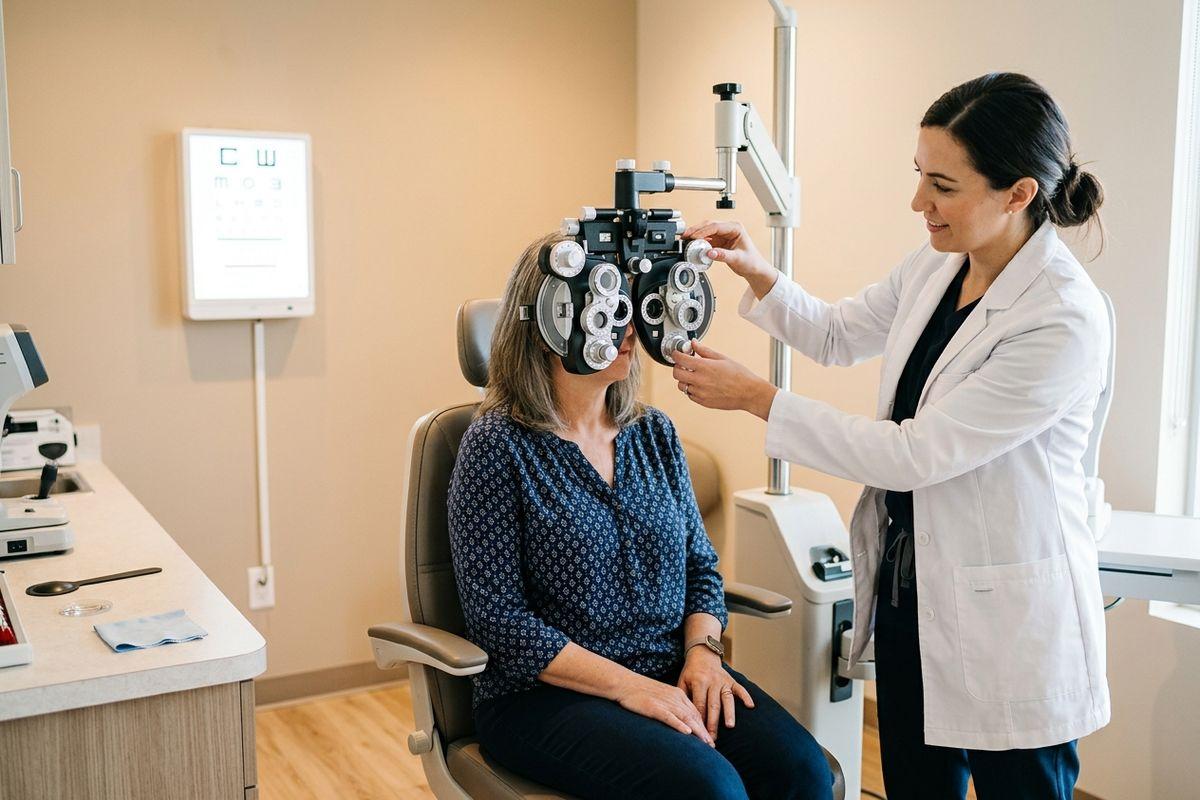
Poor sleep can throw off your blood sugar, and unstable blood sugar levels affect the tiny blood vessels inside your eyes. That combination can lead to vision changes you shouldn’t ignore. Diabetic eye exams give our team a chance to catch these changes early.
Sleep Apnea and Its Connection to Eye Health
Sleep apnea is a condition that involves repeated pauses in breathing while a person sleeps. These interruptions reduce oxygen levels, which can strain the optic nerve, raise glaucoma risk, and cause other adverse effects to the eyes.
Simple Ways to Protect Your Eyes and Sleep
A few easy steps can help both your eyes and your sleep habits.
- Use artificial tears when your eyes feel dry, especially after long screen sessions.
- Follow the 20-minute rule, looking at something far away for a short break every 20 minutes.
- Keep your bedroom dark, cool, and quiet, so you fall asleep faster and stay asleep.
Small changes like these ease daily strain and give your eyes the overnight recovery they need.
When to Book an Eye Exam
Rest fixes a lot, but not everything. If dryness or blurry vision hangs on for more than a few days, it’s time for a closer look. Stonebridge Eyecare serves families of every age, from kids to seniors, all in one place.
At Stonebridge Eyecare, our team pairs modern testing with warm, personal care to keep your family’s vision in good shape. If tired eyes have become part of your routine, reach out today to book an eye exam and give your eyes the attention they deserve.