

Managing diabetes requires paying close attention to your body, and your eye health forms an important part of that routine. If you have diabetes, frustrating blurry vision could be connected to your blood sugar levels.
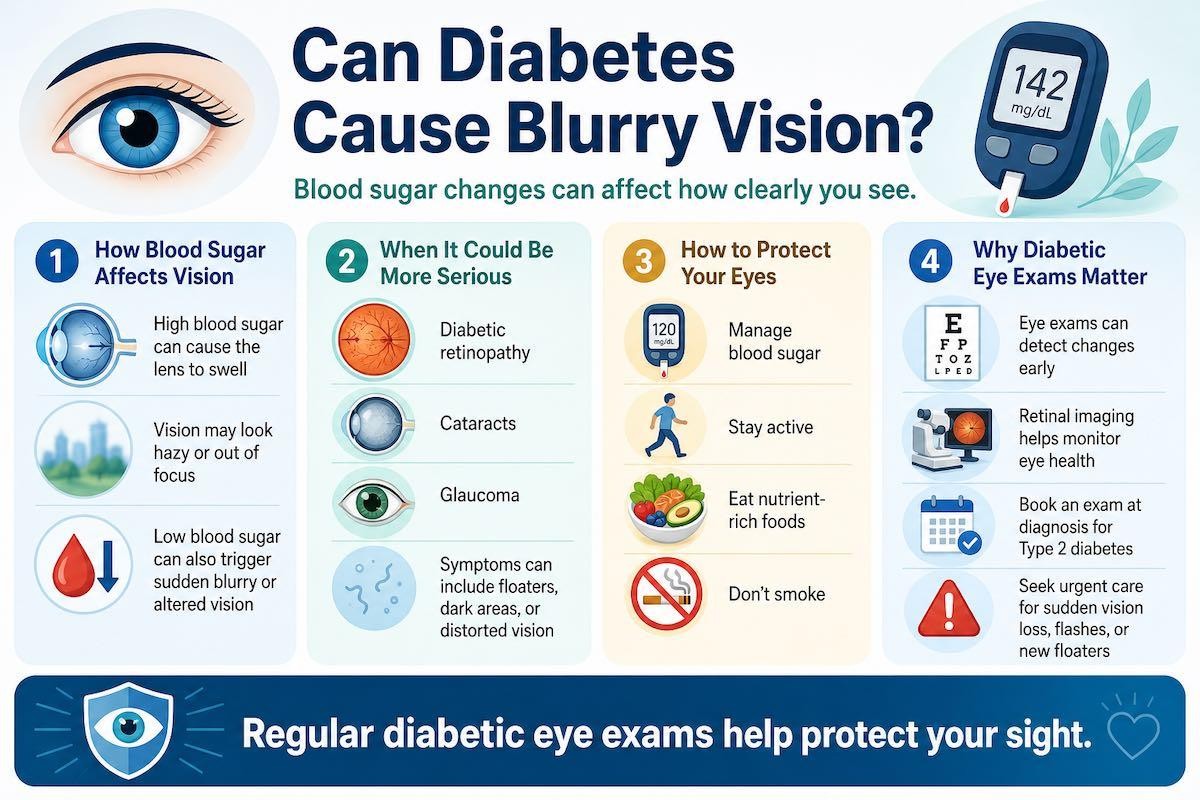
Yes, diabetes can cause blurry vision, and it often happens because high blood sugar causes the lens of your eye to swell and change shape. When the lens changes shape, it bends light differently, which throws your focus off even if you’re wearing the proper lenses. As your blood sugar rises and falls, your vision can change right along with it.
What Blurry Vision from Diabetes Feels Like
When blood sugar climbs too high, your vision may become blurry as fluid levels shift in the eye and affect how the lens focuses light. This can make everything look hazy or soft around the edges.. You might struggle to read a screen or recognize a face across the room.
Along with blurry vision, you might also notice:
- Vision that looks hazy or out of focus
- Headaches, increased thirst, or frequent urination
- Fatigue and unexplained weight loss
Low blood sugar brings its own set of warning signals, and vision changes can be one of them. Blurry, wavy, or altered vision can happen suddenly, which may feel alarming if you’re not expecting it.
Other signs that your blood sugar may have dropped too low include:
- Sudden blurry vision or visual disturbances
- Shaking, sweating, or feeling anxious
- A fast heartbeat with tingling or numbness
When Blurry Vision Points to Something More Serious
Not all diabetes-related vision changes are temporary. Over time, high blood sugar can damage the tiny blood vessels in the retina, the light-sensitive tissue at the back of your eye. When those vessels leak fluid, your vision starts to break down in ways that don’t come and go with your blood sugar.
Symptoms of diabetic retinopathy can include:
- Spots or floaters drifting across your field of view
- Dark or empty areas in your vision
- Blurry or distorted central vision
Without treatment, diabetic retinopathy can lead to lasting vision loss. Detecting it early through regular eye exams gives your optometrist more opportunities to monitor, manage, or refer for treatment before vision is seriously affected.
Other Diabetes-Related Eye Conditions
Retinopathy isn’t the only eye condition linked to diabetes. People with diabetes tend to develop cataracts at an earlier age than those without the condition. Cataracts cause the lens to cloud over, making vision look foggy or dim.
Diabetes also increases the risk of glaucoma, a condition where pressure builds up inside the eye and damages the optic nerve. A comprehensive diabetic exam allows your optometrist to check for both conditions and spot changes before they affect your daily life.
How to Protect Your Eyes When You Have Diabetes
The choices you make every day have a real impact on your eye health. Keeping your blood sugar, blood pressure, and cholesterol in a healthy range helps reduce strain on the small blood vessels in your eyes. Think of it like giving those vessels a lighter load to carry.
A few other habits that can support your vision over time include:
- Staying physically active, even with short daily walks
- Eating foods rich in leafy greens, fish, and colourful vegetables
- Quitting smoking to lower your overall eye disease risk
Why Regular Diabetic Eye Exams Matter
A diabetic eye exam is more detailed than a standard vision check. Your optometrist may dilate your pupils and use retinal imaging to get a clear view of the retina, macula, optic nerve, and blood vessels at the back of the eye.
The timing of your first diabetic eye exam depends on the type of diabetes you have. For Type 2 diabetes, schedule an exam at diagnosis. For Type 1 diabetes, many guidelines recommend starting within 5 years of diagnosis, then continuing with regular follow-up as recommended by your optometrist or healthcare team.
After your first exam, schedule regular check-ins to help track any changes over time. If you notice sudden vision loss, new floaters, flashes, dark areas, or rapid changes in your sight, contact your optometrist or seek urgent care rather than waiting for your next visit.
Take Control of Your Diabetes and Your Vision
Your vision deserves dedicated care, and you don’t have to manage your eye health alone. Regular monitoring uncovers early changes and helps you maintain clear, comfortable sight for life.
Book your diabetic eye exam today and take a proactive step toward protecting your vision! Our supportive team at Stonebridge Eyecare is here to help you understand your eye health and provide the compassionate care you need.