Kids learn most of what they know by looking. So when vision isn’t working the way it should, the clues rarely look like an eye problem. You might notice frustration with homework, or a kid who suddenly has no interest in colouring.
Very few children mention blurry vision, because they assume everyone sees the world the way they do. A comprehensive eye exam gives an optometrist a much closer look than a school screening does.
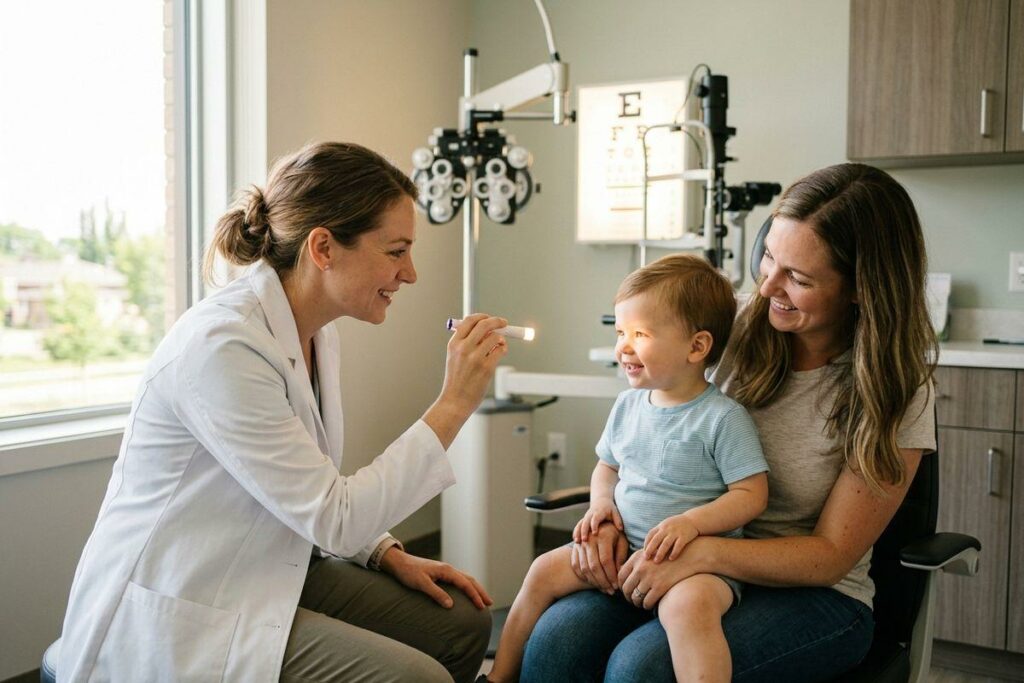
A child’s first eye exam is a short, playful appointment where an optometrist uses lights, moving objects, picture symbols, and handheld instruments to measure how well your child sees and how their eyes are developing, long before they can read a letter.
When to Book That First Visit
The schedule is simpler than most parents expect. Book your child’s first exam between 6 and 9 months of age, while eye alignment and focusing skills are still coming together.
Plan another visit somewhere between ages 2 and 5, before school starts. After that, an annual exam keeps pace with the changes that come with growing. Many vision problems develop quietly, and the early years give an optometrist the most options to work with.
Your Child Doesn’t Need to Know Their Letters
Plenty of parents hold off because their toddler can’t read yet. That isn’t a barrier.
Optometrists have tools built for patients who don’t talk. Retinoscopy bounces light off the back of the eye to measure a prescription without asking a single question. Picture charts and matching games handle the rest once your child is older.
So bring your baby in. The exam adapts to whatever your child can do.
What Actually Happens in the Exam Room
The appointment opens with a conversation. Your optometrist will ask about your child’s birth, family history of eye conditions, and everyday habits like screen time and outdoor play.
Mention anything you’ve noticed at home. Your observations often point the exam in a useful direction. Then the testing starts, and it looks different depending on age. Here’s roughly what each stage involves:
- Babies follow a light or a small toy while the optometrist watches how their eyes track and work together
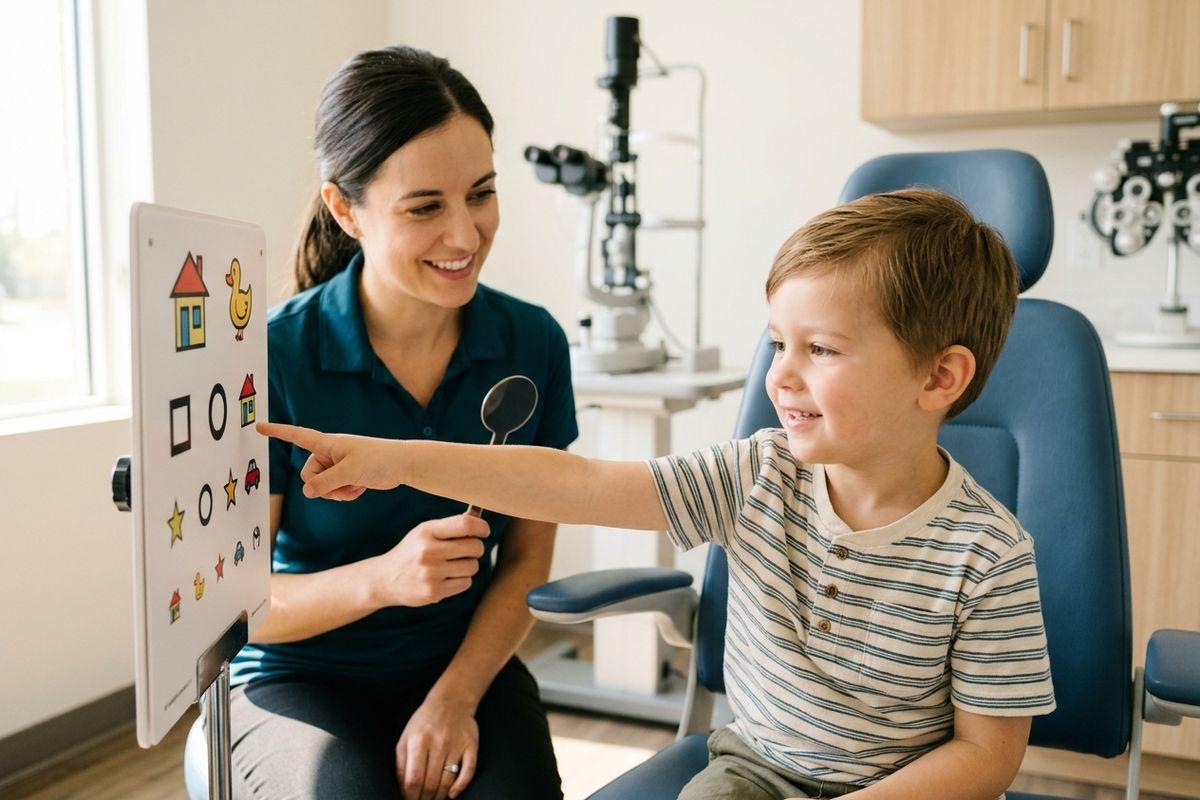
- Toddlers point at picture symbols and match shapes to show what they can see
- Preschoolers take part in depth perception and colour vision checks
- School-age kids read charts and complete focusing and eye teamwork tests
Most of it feels like a game, and nothing should hurt.
What Your Optometrist Is Looking For
A first exam covers far more than whether your child needs glasses. Your optometrist also examines the health and development of the eye itself.
These are the conditions that come up most often at this age:
- Amblyopia, or lazy eye, where the brain starts favouring one eye over the other
- Strabismus, where the eyes don’t line up and point in the same direction
- Myopia, the nearsightedness that blurs anything at a distance
- Hyperopia, or farsightedness, which blurs close-up work like reading
Finding any of these early means your child gets support while their visual system is still forming. If a prescription turns up, your optometrist will walk you through the options, starting with glasses. For kids whose nearsightedness keeps advancing, myopia control with specialty lenses or drops may help slow the pace.
Signs Worth Watching for at Home
You see your child every day, so you’ll notice things an exam room can’t. A few habits deserve a second look:
- Squinting to see something across the room
- Rubbing their eyes often, outside of nap time
- Sitting right up against the TV
- Tilting their head to one side to look at something
- Complaining of headaches after reading or screen time
Any of these are worth a phone call. Book an appointment rather than waiting for the next scheduled visit.
How to Set Your Child Up for a Good Appointment
A bit of planning goes a long way. Choose a time of day when your child is rested and fed, well clear of a nap.
Pack a favourite toy or blanket so they have something familiar in hand.
Talk about the visit ahead of time in an easy, matter-of-fact way, and tell them they’ll look at pictures and lights. Kids read your tone more than your words, so keeping it relaxed does most of the work.
What Dilating Drops Do
Some exams include dilating drops that widen the pupil so your optometrist can see the retina and optic nerve clearly.
The drops sting for a second or two, then blur near vision for a few hours. Bring sunglasses along, since bright light can feel uncomfortable afterward.
Plan a quiet afternoon and skip homework if you can.
Give Their Eyes a Head Start
That first appointment sets a baseline every future visit builds on. It also teaches your child that eye exams are nothing to be nervous about.
At Stonebridge Eyecare, our optometrists take the time to make a first visit feel welcoming for kids and parents alike. Book your child’s appointment and find out how their eyes are doing.