
Key Takeaways
- A direct allergy to contact lens material is uncommon; deposits, solutions, dryness, fit, and inflammation are more frequent causes of discomfort.
- Redness, itching, gritty sensations, and blurred vision are common signs of a reaction.
- Cleaning-solution ingredients, lens deposits, dryness, and poor fit can all contribute to irritation.
- Depending on the cause, options may include a different solution or lens, daily disposables, a refitting, or dry eye care.
- Persistent or worsening symptoms are a good reason to visit a Saskatoon optometrist.
Your Eyes Are Trying to Tell You Something
You put in your contacts as usual, but halfway through the day, your eyes are red, scratchy, and uncomfortable. Maybe you rinse the lenses, blink a few times, and hope for the best, but our team at Stonebridge Eyecare wants you to know that wearing contact lenses should feel convenient, not uncomfortable. The good news is that most reactions have a clear explanation and a workable solution.
Yes, your eyes can react to your contact lenses. It might be caused by a true allergic reaction, a sensitivity, or irritation from a completely fixable issue. Either way, you don’t have to manage it all alone: A comprehensive adult eye exam is often where the answers start.
Allergy vs. Intolerance: What’s the Difference?
Allergy and contact lens intolerance can feel similar, but they are not the same. A direct allergy to the lens material is uncommon; the immune response is more often related to deposits, environmental allergens, or ingredients in a care solution. Dry eye, friction, and poor fit can cause similar discomfort without an allergic reaction.
Intolerance is different. It’s a sensitivity in which your eyes get irritated by wearing contact lenses without a full immune response. You could compare it to how some people find certain fabrics scratchy without being allergic to them.
Both can make wearing contacts uncomfortable, but they often need different fixes. That’s why figuring out which one you’re dealing with matters. The type of contact lens you wear can also play a role in how your eyes respond over time.
Signs Your Eyes Are Reacting to Your Contacts
Common Symptoms to Watch For
Reactions to contact lenses don’t always look dramatic. Sometimes it starts as a mild annoyance that gradually gets worse. Watch for:
- Redness, itching, or a burning sensation after wearing lenses
- A gritty feeling, like something is stuck in your eye
- Blurred vision that doesn’t clear up when you blink
- Excess mucus discharge or puffy eyelids
If these symptoms are persistent or worsening, your eyes may be reacting to your lenses rather than just having a rough day.
Giant Papillary Conjunctivitis
This is a condition where small bumps form on the inside of your upper eyelid. It sounds alarming, but it’s actually a known reaction among contact lens wearers. Protein deposits on reusable lenses, lens friction, or an allergic response can all contribute to it.
Giant papillary conjunctivitis can make lenses feel uncomfortable or unstable and may cause itching, mucus, or a foreign-body sensation. An eye exam is needed to confirm whether it is the cause.
What Can Contribute to a Contact Lens Reaction?
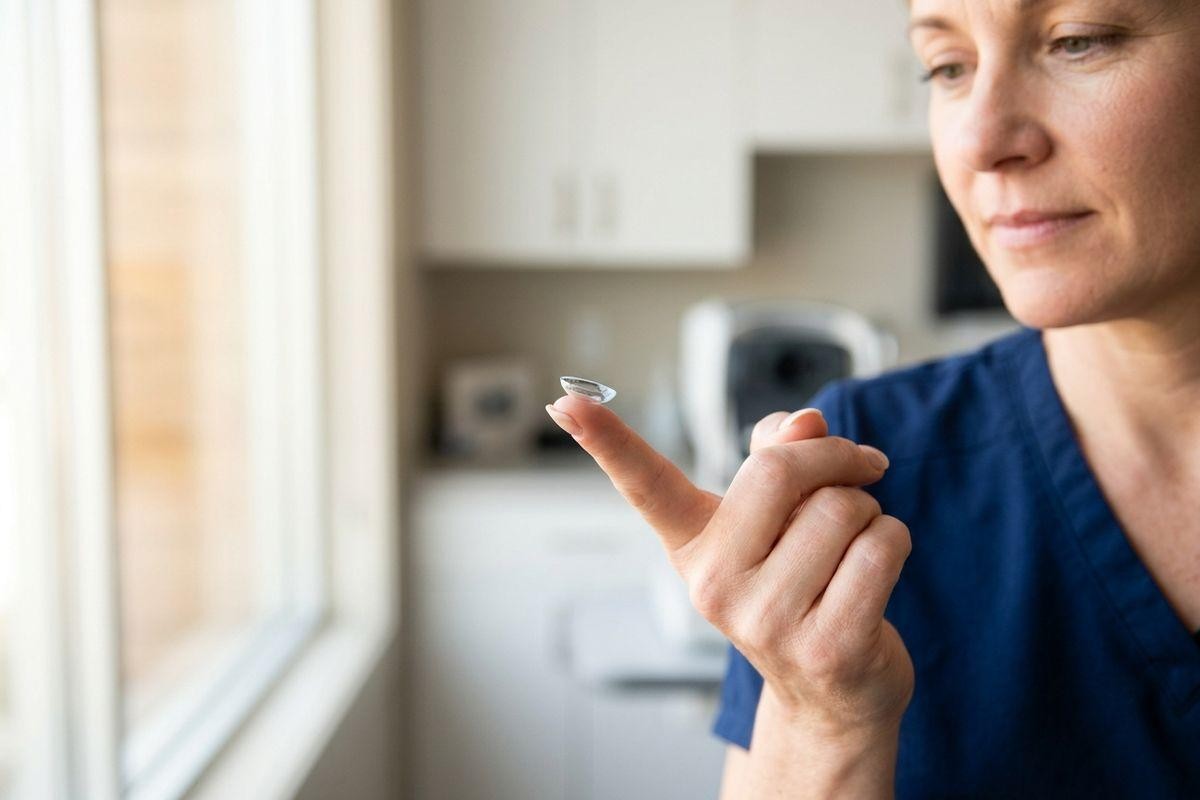
The lens itself isn’t always the problem. Some of the most common contributors include:
- Preservatives in contact lens solution, which some eyes are sensitive to
- Protein and debris that build up on reusable lenses over time
- A poor lens fit or a prescription that’s no longer accurate
An outdated prescription or a lens that sits slightly off-centre can cause ongoing friction without you even realizing it. That daily low-grade irritation adds up fast. Proper contact lens care and cleaning habits can also make a meaningful difference in how your eyes feel day to day.
What to Do When Your Eyes React
Short-Term Relief at Home
The first thing to do is take the lenses out and give your eyes a break. From there, a few simple steps can help reduce discomfort:
- Use preservative-free artificial tears to soothe dryness and flush irritants
- Apply a cold compress over closed eyes to help reduce swelling
- Avoid reinserting lenses until the irritation has clearly settled down
When to See a Saskatoon Optometrist
Remove your lenses and contact an eye doctor if irritation is unusual, persistent, or worsening. Seek prompt care for pain, light sensitivity, discharge, or sudden vision changes, because contact lens wear can increase the risk of corneal infection.
A contact lens fitting in Saskatoon can also reveal whether your current lenses are still the right fit, especially if your prescription has changed or your eyes have become drier over time.
Your Options for Comfortable, Clear Vision
Reactions to contact lenses don’t have to mean giving up on them entirely. There are real alternatives worth considering:
- Daily disposable lenses reduce protein buildup since you start fresh each day
- A different lens material, including silicone hydrogel when appropriate, may improve comfort after a professional refitting
- Dry eye treatment in Saskatoon can help address the underlying dryness that makes lenses harder to tolerate
- Laser vision correction is not a treatment for an active contact lens reaction, but a consultation may be considered later if you want to reduce reliance on lenses and your eyes are healthy
Our team at Stonebridge Eyecare can discuss your options with you and help you decide what might be right for your lifestyle.
Schedule Your Appointment
The right path depends on what’s actually contributing to your reaction. That’s something our team can help you figure out. If your contacts have been causing redness, irritation, or blurred vision, book a contact lens assessment with Stonebridge Eyecare in Saskatoon.